How to Build an MCP Server That Actually Sells#
Founding Member rate ends June 10, 2026. Activate monetization on any server before June 10 to lock in the 15% Founding Member fee forever. New servers from June 10 onward pay the standard 20% platform fee.
TL;DR: We banned a developer who submitted 15 AI-generated servers in one hour. Zero users, zero revenue. The spray-and-pray approach doesn't work. Treat your MCP server like a mini-startup: research the market, validate the idea, speak the customer's language, and promote it after launch. One server that sells beats ten that collect dust.
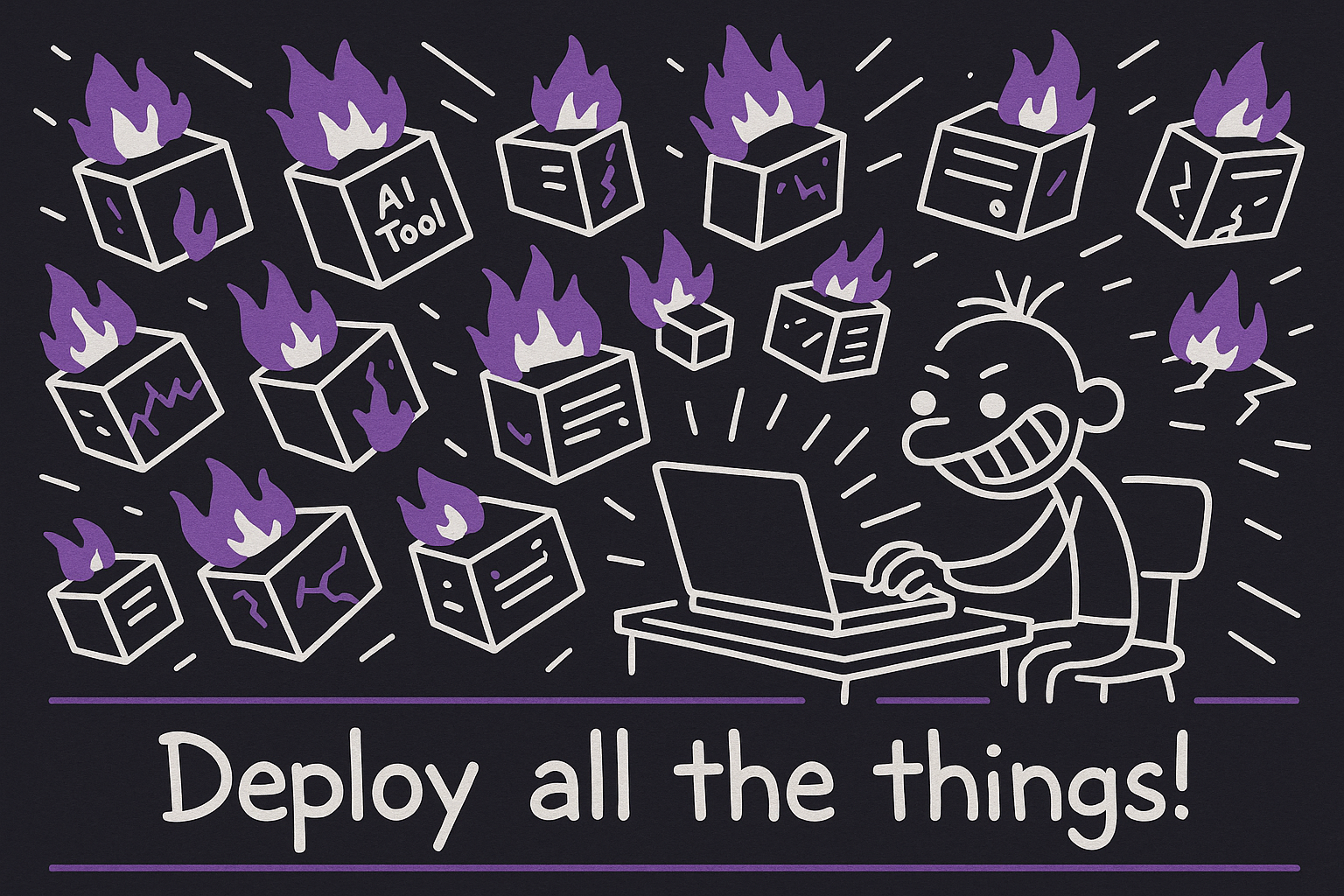
Last week we had to rate-limit and then ban a developer on MCPize. They submitted 15 servers in a single hour. Every one of them was AI-generated boilerplate. Names like "Universal Database," "Agent Orchestrator," "CSV Analytics." Sounds impressive on paper. None of them worked properly. None had real users. The whole batch burned our infrastructure and cluttered the marketplace.
I see this pattern constantly. Developers fire up Claude Code or Cursor, generate a dozen MCP servers on random topics, publish them all, and hope something sticks. I call it spray-and-pray. It's a dead end. You waste your own time, annoy users who try your product and find it broken, and end up with nothing to show for it.
Here's the thing nobody wants to hear: one server that sells is worth more than ten that sit there. And building that one takes actual work.
This is my playbook for building an MCP server that generates real revenue.
1. Treat Every Server Like a Mini-Startup#
Your MCP server is a product. It has a customer, a problem it solves, and a market. Before writing a single line of code, figure out who you're building for.
Start with two questions. Who is your Ideal Customer Profile (ICP)? What is your Unique Value Proposition (UVP)?
You can do this research inside ChatGPT or Claude. Ask them directly: "Who would pay for an MCP server that does X? How much would they pay? What alternatives exist?" Use market research prompts. Think of it as founder mode for a micro-product.
Every successful server I've seen on MCPize started this way. The developer knew exactly who they were building for before they opened their editor.
2. Pass the Uniqueness Test#
This is where most ideas die, and they should.
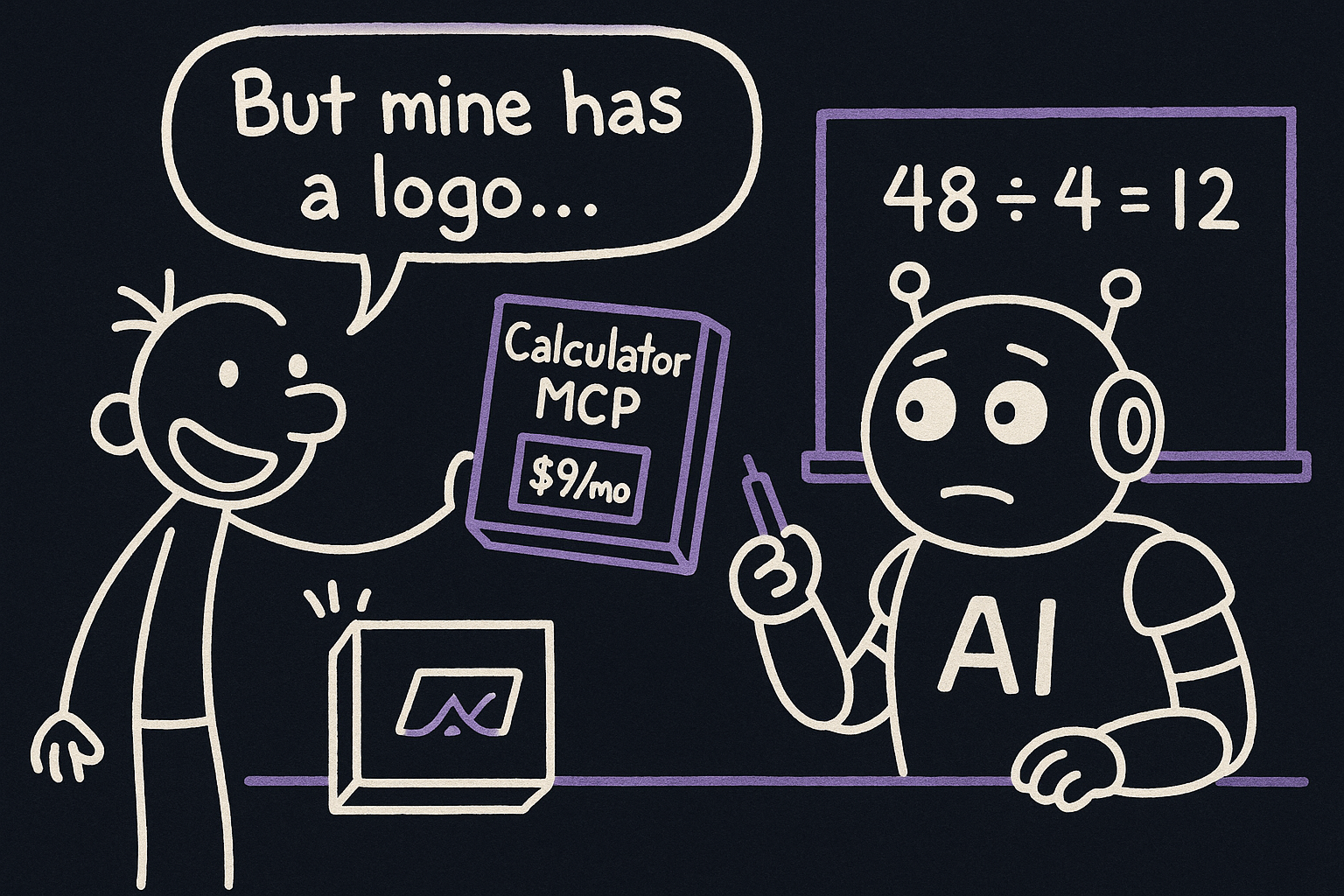
Ask yourself an honest question: can the LLM already do this without my server? If yes, your idea is worthless. Nobody's going to connect and pay for a calculator MCP when Claude can do arithmetic in a text prompt. Nobody needs another PDF reader when most agents ship with file handling built in.
It gets worse. I regularly see developers trying to rebuild servers for established services like Figma, Cloudflare, Gmail. These already have official MCP servers from the companies themselves, plus community-maintained alternatives. You're not going to outdo years of work by generating a wrapper in an afternoon. And you definitely won't charge money for it.
The servers that sell solve problems the LLM can't handle alone. Real-time data feeds. Domain-specific APIs. Industry calculations that require external databases. Hardware integrations. Niche compliance checks. Connecting to internal systems that have no public API documentation. That's where the money is.
Think corner cases, not broad categories. "AI for healthcare" is too wide. "FHIR compliance validator for US hospital billing codes" is narrow enough to own. The narrower the problem, the easier it is to be the only solution.
Talk to your LLM about it. Ask: "Can you solve this problem without external tools?" If it says yes, move on to the next idea.
3. Speak Their Language#
You've validated the idea. Now make sure people can find it.
Do keyword research. Use Ahrefs, SpyFu, or DataForSEO to understand what your ICP actually types into search engines when they're looking for this kind of solution. The words they use might be different from the words you use.
Put those keywords everywhere: your server name, the short description, the long description, even your tool names and parameter descriptions. MCPize has keyword suggestions built in, but don't rely on auto-generated recommendations alone. Do the research yourself. Five minutes with a keyword tool beats guessing.
The developer who names their server "Multi-Modal Document Processor" will lose to the one who names it "Invoice Parser for QuickBooks." Specific beats clever every time.
4. Think Like a Product Manager#
Before building, ask your LLM to play Head of Product. Prompt something like: "I'm building an MCP server for [ICP]. What tools should it expose? What parameters would make sense for each tool? What use case would make someone pay $15/month?"
Keep the tool count under 10. This matters more than you think. LLMs struggle with large tool lists. They get confused about which tool to call, they hallucinate parameters, they pick the wrong one. A focused server with 5 well-designed tools will outperform a bloated one with 30.
Think about the user's workflow. What's the sequence of calls? Does tool A's output feed into tool B? Are the parameter names obvious enough that an LLM will call them correctly without special instructions?
5. Don't Ship Broken Code#
Yes, you can generate most of the code with Claude Code or Cursor. I do it myself. But generation is not verification.
Run every tool yourself. Check that the responses make sense. Try edge cases. Use current, maintained libraries. If your server depends on a package that hasn't been updated in two years, find an alternative.
Sometimes it's smarter to pay for a third-party API than to build parsing logic from scratch. If there's a reliable service that does what you need for $20/month, use it. Your customers pay you for the outcome, not for how you built it.
6. Name It Like a Product, Not a Repo#
Your server name is a first impression. "mcp-tool-helper-v2" tells nobody anything. "Stripe Revenue Dashboard" tells them exactly what they're getting.
Name, description, tool names: they all need to speak the customer's language. Not developer jargon, not generic AI buzzwords. The specific vocabulary your ICP uses when describing their problem.
Consult your LLM here too. Paste your current name and description and ask: "Would a [your ICP] immediately understand what this does and why they need it?" If the answer is no, rewrite it.
7. Add a SKILL.md#
Most AI agents, including Claude Code, Cursor, and others, support the SKILL.md format. It's an instruction file that tells the agent how to use your server for specific tasks.
Think of it as a user manual that the AI reads. Without it, the agent has to guess how to combine your tools. With it, the agent follows a proven workflow and gets the result your customer is paying for.
This is the difference between selling raw tool access (low value) and selling outcomes (high value). A well-written SKILL.md turns your MCP server from "a set of API wrappers" into "a thing that does my job for me."
8. After Launch: the Real Work Begins#
Publishing your server is not the finish line. It's the starting gun.
Find where your ICP hangs out. Discord servers, Reddit communities, X/Twitter, niche forums. Go there and talk about what you built. Not a sales pitch. Explain the problem you solve and link to your server.
Post on your own social channels. Every time. LinkedIn works surprisingly well for B2B solutions, especially narrow ones. Search for people with the job title your server helps and connect with them.
List your server in every directory and catalog you can find. The more places it shows up, the more people discover it.
Keep shipping updates. Every new feature, every bug fix, every improvement is a reason to talk about your product again. If paying customers ask for something, build it. Chances are other potential customers want the same thing.
Don't be shy about self-promotion. Most developers underdo it. You built something useful. The people who need it don't know it exists yet. That's your job to fix, not theirs. Write a short post, share the link, explain what problem it solves. Do it on every platform where your ICP spends time. Repeat after every update.
Use AI to Find the Idea, Not Just Write the Code#
If you use Claude Code or Cursor, install mcpize-skills and run /mcpize:idea. It walks you through market research, ICP definition, and competitive analysis before you write a single line of code. Then /mcpize:build and /mcpize:publish take you from validated idea to live server in one session.
"I could publish a thousand MCP servers tomorrow. I have access to every API, every dataset, every template. But I don't — because mass-producing generic servers is a waste of everyone's time. The marketplace doesn't need more noise. It needs one developer who understands invoice reconciliation for European freelancers, or HVAC sensor monitoring for building managers, or compliance checking for Brazilian tax law. Find your thing. Own it. That's how you build something worth paying for."
— Oleg Kopachovets, founder of MCPize
The Bottom Line#
Your MCP server is not a code snippet you generate in five minutes and forget about. It's a product. It has a customer, a value proposition, and a market. The developers earning real money on MCPize treat it that way. They research, they validate, they name things carefully, they test, they promote, and they iterate.
One server that sells is worth more than seven that nobody needs. Build that one.
Start building on MCPize Learn about monetization